


Snow clung to the ground, frozen in thick sheets and even as afternoon approached, it was a biting 14 degrees. At 11 a.m. on January 28, Frederick City officials set out to count the number of unhoused people who were living out in the elements.
Shelters had extended the code blue weather warning to February 1, and were encouraging the unhoused to get indoors. Warming stations, hot meals, and extra beds were being offered, said Nick Brown, executive director of Beyond Shelter Frederick, in light of freezing temperatures and a heightened risk of hypothermia and frostbite.
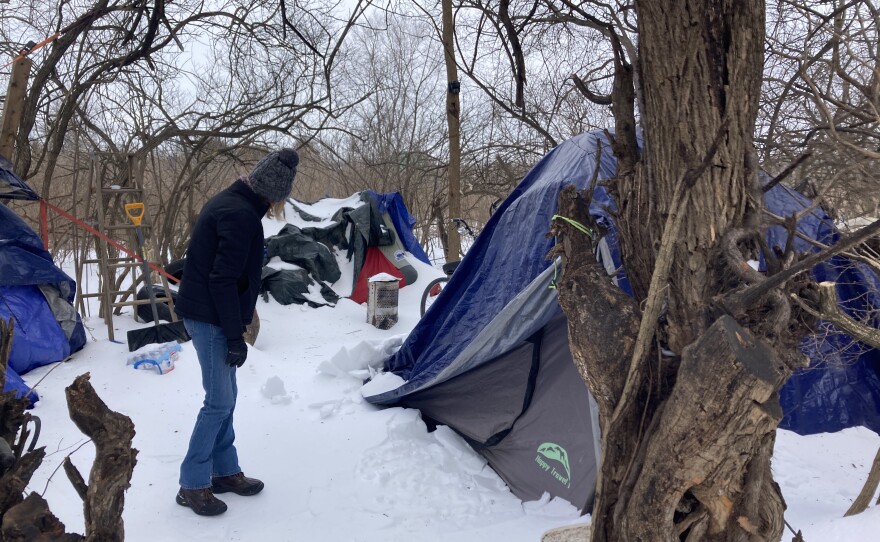
Despite all this, surveyors were still able to find people sleeping outside. They lived in encampments filled with whatever supplies they could afford or find. Tents and tarps held up by rope, shopping carts filled with various items, and makeshift fences made of scrap wood and other objects filled clearings hidden within trees throughout the county.
At a glance, any patch of forest along a road or behind a shopping center could merely seem like a bit of scenery. But for some, it was where they crafted a home.


The PIT Count
The officials were conducting the point in time survey, also known as the PIT count. Founded in 1983, the count serves to reveal the severity of homelessness in the US. It determines the amount of funding local jurisdictions receive from the federal government to help the unhoused.
Stuart Campbell, Director of Frederick City’s Department of Housing and Human Services says the data creates a snap shot the county uses to inform its policies. “It gives us, most importantly, the opportunity to look at trend lines over the years, to determine whether homelessness is increasing or decreasing,” Campbell explained. “And we can adjust our strategies in response to that.”


Shelters and other organizations report how many people utilize transitional and emergency housing. Campbell explained transitional housing is a temporary program that houses a person while helping them towards a more permanent living situation. Emergency housing is for those in critical need of immediate shelter and are often overnight.
But for those with nowhere to go, someone has to go find them. That’s where the counters come in. Traveling in groups, surveyors are assigned routes and are given a list of questions to ask those they encounter.


The day begins
The first stop of the day was an encampment hidden within a small patch of trees behind a shopping center. That’s where the surveyors encountered Mike.
Mike is 24 and has been unhoused off and on for three years. His current living situation is a tent, a circumstance he says he’s tried working his way out of. “It really began when I moved from New York,” Mike said. “I came down here, my dad stayed up there, and I tried to do different. The city up there’s just really hard.”
Mike’s situation is not unfamiliar to many Americans. In fact, according to the U.S. Interagency Council on Homelessness (ICH), “40%-60% of people experiencing homelessness have a job.” The ICH points out that often, wages are not keeping up with the cost of housing.

In Frederick County, 32% of households live below what is known as the ALICE threshold. ALICE stands for access limited, income constrained but employed and represents families who live above the poverty level yet still can’t make ends meet. This comes from the ALICE report, a study done each year by United Way of Frederick County.
For Mike, it can be hard to find a job, but he has found work in snow removal in the winter and landscaping in the spring. Despite his situation, Mike hopes he won't be without a home for much longer. “ I just wish that everybody would help us,” Mike said. “Like we’re not just addicts. We’re not just wasteland people. We’re out here trying to survive just like everybody else. We’re just in a tighter spot.”
Unwanted help
The list of questions the surveyors asked included information about a person's physical and mental health, as well as their needs and safety. Handwarmers were offered to anyone who needed them, but as the day progressed, some people simply wanted to be left alone.


Occasionally, an encampment would be found displaying warning signs, telling people to stay away. At one point, the surveyors met an unhoused woman they were familiar with. While they tried to ask their questions, the individual refused any assistance.

Michele Ott with Frederick City’s Department of Housing and Human Services said many unhoused people are hurting. “It’s not that they’re distrusting of the services or even of our staff, it’s just more so because of whatever trauma they’ve had in their past, they’re unable to open up,” Ott clarified.
According to the American Bar Association, 90% of unhoused women have been abused. Additionally, many who face domestic abuse can become unhoused as they flee dangerous circumstances.
Tiffani Bonilla is a case worker for the HHS, and explained many of her clients experience the same anxiety around making connections. For her, it's a matter of building trust. “It gives us an opportunity to get to know them better. So, repeat appointments, inviting them to our recreational activities, it all gives them the opportunity for them not to see us as a government agency, or a case manager, but as a person,” Bonilla said.
Day’s end
The survey ended where it began, back at the HHS, where a warming station was open for unhoused individuals looking to get out of the cold. Inside, people were eating a snack, socializing, resting and charging their phones.
Mr. Addison was one such individual. Having been born in 1973, he has been unhoused in one way or another since he was 16. Originally from New York City, Addison said his first run in with housing instability was when he and his brothers were put in foster care.
Addison spoke of the work he’s doing with the city’s outreach programs, but explained a lack of formal education can really get in the way. He has also seen the way substance abuse and addiction can lead others down a dark path. “When you’ve been homeless for so many years, it turns into decades,” Addison explained. “You’re part of society, but you’re part of, like someone being in prison.”
Across the US, lack of education remains a major impediment for many unhoused youths. If a student does not earn their GED, they are 3.5-4.5 times more likely to become unhoused than their peers (1, 2). Compounding these issues is the prevalence of substance abuse, which affects upward of 36% of unhoused people in the US.

Not everyone who uses the county’s services is from Frederick. Ashzz has been unhoused for over a decade and has traveled across the country. With the weather being so cold, he’s thankful he has a place to rest. “That makes me happy in my heart, that there’s actually kind and caring people, because I’ve been across the whole country, and not a lot of states have services like this,” Ashzz said. “In fact, I’ve walked up to some shelters that were just uncaring.”
Nick Brown, Director of Beyond Shelter Frederick, wants the government to conduct the PIT count during other seasons as well, but Ashzz isn’t sure that would help. “Summer time, man, a lot of migration will happen,” Ashzz explained. “I can get out of this state, it’s not like six feet of snow blocking me in. I think that winter time might be a little more accurate on the counting.”
Amidst the PIT count, some shelters gave second chances to people who may have previously been barred, to ensure everyone could get out of the cold.


